



Cinema had barely been discovered before it got its hands on the cowboy film. For years, cowboys, who were in reality nothing more than cattle herders, were presented as flawless heroes, while the innocent and the oppressed, Native Americans above all, were cast without exception as the villains.
Hürrem Erman
A man came from Rome and, with just six films, changed the history of the American Western.
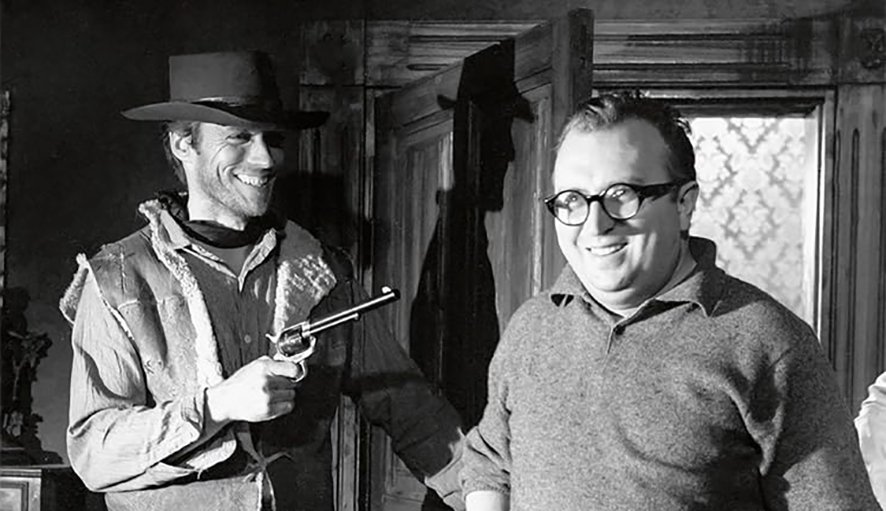
In 1966, a film shot at the Cinecittà studios in Rome was preparing to alter the course of cinema history. The Good, the Bad and the Ugly was not simply a Western; it was a manifesto that challenged Hollywood’s cultural hegemony, redefined cinematic language, and permanently rewrote the genetic code of popular culture. Its director, and its everything, Sergio Leone was not one of the American film industry’s own children but a visionary who came from the Italian film tradition and interpreted the mythology of the West through an entirely new perspective.
The Western was the most powerful cultural weapon America had developed against its own complex about having no history. While the massacre of Native Americans was presented as “the advance of civilisation”, the theft of their lands was legitimised through the doctrine of Manifest Destiny. The cinematic universe constructed by John Ford represented the apex of this ideological perspective. The red rock formations of Monument Valley, passing through Ford’s lens, became not merely geological formations but sacred spaces in which the American spirit was reflected. With Stagecoach (1939) he launched John Wayne to stardom while simultaneously defining the prototype of the Western hero: powerful yet compassionate, hard yet just, individualistic yet bound to communal values.
Ford’s mastery lay in his ability to blend these ideological messages with artistic perfection. His films were cinematic poetry as much as they were propaganda. The interplay of light and shadow reflected his characters’ psychological states; his landscape shots deepened the emotional dimension of his epic stories.
A Genre in Crisis
The late 1950s and early 1960s represented not merely a numerical decline for the American Western but a period of existential crisis, a multilayered phenomenon stretching from technological change and social transformation to shifts in international politics and cultural paradigm. The arrival of television in the hierarchy of mass media produced a tectonic shift that shook the Hollywood industry to its foundations. Television sets, present in only nine percent of American homes at the start of the 1950s, had reached close to ninety percent penetration by 1960. Western series such as Bonanza, Gunsmoke, and The Rifleman offered audiences their weekly cowboy fix and reduced the need for the theatrical Western.
The Vietnam War’s effect on the American social consciousness had shaken the ideological credibility of the Western genre to its core. The conflict called into question America’s moral authority on the world stage and fractured domestic political consensus. By revealing the consequences of American military interventionism without mercy, it made the Western’s glorified narratives of violence deeply problematic. Audiences who had now experienced the real horror of violence began to find the sterilised action sequences of the Westerns naïve.
At the same time, the counter-culture movement of the 1960s directly challenged the traditional values of the genre, while the Civil Rights Movement, Native American rights activism, and the emerging feminist consciousness exposed the assumptions of white male supremacy embedded in Western films.
The Making of Leone
Sergio Leone’s birth on January 3, 1929, in Italy was not merely the arrival of an individual but the emergence of one of the most influential director-auteurs in cinema history. His father, Vincenzo Leone, who worked under the pseudonym Roberto Roberti, belonged to the pioneering generation of Italian cinema. A prolific director with more than sixty films to his name, Vincenzo was the first force that shaped young Sergio’s cinematic genetic code. This dual artistic inheritance explains Leone’s innate affinity for the medium; more importantly, it gave him the opportunity to observe the practical workings of professional filmmaking at close range, from early childhood. The daily rhythms of the household moved in sync with the film industry’s rhythms, and the young Sergio grasped early that cinema was not only an artistic endeavour but a complex business operation.
Leone’s entry into the film industry coincided with the peak of the Italian Neorealist movement. His work on Vittorio De Sica’s set for Bicycle Thieves (1948) was a pivotal experience for him. De Sica’s directorial approach, the use of non-professional actors, the authenticity of location shooting, the artistic expression of social reality, profoundly shaped Leone’s future aesthetic choices.
Leone’s deep admiration for John Ford formed an artistic relationship far more complex than simple fan appreciation. His detailed study of Ford’s films expanded the vocabulary of his own cinematic language and provided the sophisticated foundation of his directorial vision. Ford’s character prototypes, particularly the masculinity and moral complexity embodied by John Wayne, influenced Leone’s future conception of the protagonist. Yet Leone processed Ford’s approach not through passive imitation but through critical analysis and creative adaptation.
Among the friendships Leone forged during his formative years, the bond he formed with his classmate Ennio Morricone was the most consequential. What began as an apparently ordinary childhood friendship carried far deeper dimensions, it was the birth of one of the most productive creative partnerships in modern cinema history. Morricone’s early musical talent and Leone’s fascination with visual storytelling would unlock a complementary and extraordinary energy.
The Spaghetti Western: A Slur Becomes a Badge of Honour
The term “Spaghetti Western” was one of the most paradoxical terminological phenomena in cinema history. Initially deployed as a dismissive label, it transformed over time into the most prestigious designation for an entire genre. This linguistic reversal was not merely a semantic shift; it was a cinematic manifesto for how cultural hegemony can be turned on its head.
Demand for the Western in Europe persisted even as the genre’s popularity declined in America. European audiences, raised in the tradition of art cinema, evaluated the mythological structure and visual richness of the Western from a different vantage point. The outsider’s perspective allowed them to focus on the essence of the storytelling rather than getting caught in the genre’s clichés.
The role of Cinecittà Studios in the 1960s went beyond being a production facility, it was an international cultural crossroads. Founded during the Mussolini era for propaganda purposes, this complex was reinvented in the postwar years as a symbol of creative freedom.
A Fistful of Dollars: The Beginning
A Fistful of Dollars (1964) was, in fact, an unauthorised adaptation of Akira Kurosawa’s Yojimbo. This initially created legal difficulties, but it secured its place in cinema history as a striking example of cross-cultural artistic pollination. In transposing Kurosawa’s samurai narrative to a Western setting, Leone applied a series of fundamental transformations. Set in a small town on the Mexican-American border, the film introduced the “Man with No Name” caught between two warring families, a character who constituted a radical departure from the traditional Western hero. He was defined by moral ambiguity and pragmatism.
The film was the catalyst that transformed Clint Eastwood from a television actor into an international star. His “Man with No Name” was characterised by minimal dialogue and maximum physical presence. The squinting eyes, the drooping cigar, and the poncho became one of cinema’s most iconic images. Made for 200,000 dollars, the film earned 14 million, a financial triumph that encouraged Italian producers to invest further in the Western genre and laid the groundwork for the Spaghetti Western explosion.
For a Few Dollars More: The Craft Matures
The second film (1965) demonstrated a notable advance in Leone’s narrative sophistication. The evolution of the Manco character and the introduction of Colonel Douglas Mortimer (Lee Van Cleef) represented a successful execution of the dual-protagonist structure. Van Cleef’s joining the cast signalled Leone’s growing maturity in character construction. His sharp features and formidable composure became cornerstones of Spaghetti Western iconography. The use of flashback technique showed Leone’s growing confidence in the manipulation of temporal narrative, while the discovery of the two bounty hunters’ professional partnership contributed to the further development of the film’s themes of moral ambiguity.
The Good, the Bad and the Ugly: The Summit
The third film (1966) became the final destination of Leone’s artistic vision. The complexity of the three main characters’ moral positions had completely overturned the conventional Western’s binary oppositions. Even the “Good” character’s selfish motivations represented a deconstruction of the conventional heroic prototype. The film also demonstrated bold courage in challenging commercial cinema standards with its three-hour running time. Leone’s artistic conviction resisted market pressures and pushed the boundaries of cinematic storytelling.
The Good, the Bad and the Ugly represented the artistic zenith of the Leone-Morricone collaboration. Morricone’s innovative approach constituted a radical departure from conventional orchestral melody. The integration of whistling, gunshots, whip cracks, and operatic elements produced an unprecedented sonic atmosphere. Leone’s signature technique, the combination of extreme close-ups and vast wide shots, reached its ultimate refinement here. The close-up eye shots in the climactic duel achieved an unparalleled level of tension-building. The use of sudden zoom, a departure from the static nature of conventional camera movement, played a critical role in amplifying emotional intensity and emphasising dramatic moments. The use of depth of field, meanwhile, visually supported the hierarchy and psychological dynamics between characters, with its play of focus between foreground and background serving as a powerful tool to direct narrative attention.
Three Characters, Three Archetypes
“The Good” (Blondie): The Perfect Anti-Hero
The “Good” character played by Clint Eastwood constituted a radical departure from the traditional Western hero. Personal self-interest as primary motivation represented the subversion of conventional heroic self-sacrifice. His pragmatic approach was a demonstration of moral flexibility. His moral position was defined not as absolute but relative, being “the least bad” when compared to the other two characters reflected an approach that questioned the very concept of conventional goodness. His use of minimal dialogue and his physical, almost silent-cinema-era performance brought the powerful storytelling techniques of the silent era back to life in a contemporary context.
“The Bad” (Angel Eyes): The Personification of Sadistic Evil
Lee Van Cleef’s Angel Eyes was the cinematic embodiment of pure evil. His methodical ruthlessness and professional detachment represented a chilling demonstration of the banality of evil. The character sketched the profile of a psychopath whose motivations were money and power, who employed violence for personal pleasure, a characterisation carrying far more complex and disturbing dimensions than the conventional villain of the Western genre. Van Cleef’s physical presence, the sharp features, the narrowed eyes, the cold stare, and the menacing posture, supported the character’s inner evil visually.
“The Ugly” (Tuco): A Masterclass in Tragicomic Complexity
Eli Wallach’s performance as Tuco was a remarkable achievement in character complexity. The combination of comic ease and tragic depth made possible an exploration of the many-sided nature of the human condition. Driven by the instinct for survival, sometimes sympathetic and sometimes repellent, Tuco was an exemplar of multidimensional character creation. His emotional openness and human frailties gave him both comic and tragic dimensions simultaneously.
Legacy: The Cinema That Changed Cinema
The film’s international box-office triumph consolidated the global validity of the Spaghetti Western, and its success in European markets began to be seen as an effective challenge to American cultural hegemony. The explicit references in Quentin Tarantino’s Django Unchained and other films demonstrated Leone’s contemporary relevance. Tarantino’s use of Leone’s music and imitation of his visual style showed Leone’s central position in the postmodern cinematic vocabulary. Martin Scorsese would describe Leone as “a master of cinematic poetry” and acknowledge learning from him specifically on the subjects of rhythm and timing.
The Good, the Bad and the Ugly systematically dismantled the conventional moral certainties of the Western genre. Its characters’ materially motivated actions reflected an approach that foregrounded materialism over idealism, one that pre-empted the disillusioned mood of post-Vietnam America. The film’s violence, unlike the sterile deaths of traditional Hollywood Westerns, showed the real consequences of physical pain and death. The use of blood squibs and wound make-up took a stand against the romanticisation of violence. The inclusion of torture scenes, particularly the physical and psychological pressure applied to Tuco, revealed a level of brutality previously unseen in the Western genre. With its narrative structure in which no character is wholly sympathetic, the film laid the foundations of the anti-hero tradition in cinema.
In the final analysis, The Good, the Bad and the Ugly was far more than a successful film, it was the summit of cinematic language’s expansion and the crossing of cultural borders. Leone’s visionary approach demonstrated the limitations of genre convention while simultaneously proving the limitless potential of artistic innovation. The film’s enduring influence manifests itself across multiple dimensions: technical innovation, cultural impact, musical legacy, and narrative sophistication. The permanence of Leone’s trace in the DNA of contemporary cinema can be read as a testament to the timeless quality of genuine artistic vision.
The Good, the Bad and the Ugly will always remain the high-water mark of the Spaghetti Western movement. The film stands as proof that cultural imperialism can be defeated by artistic resistance, that creative vision can transcend geographical and linguistic borders, and that individual artistic genius, in a collaborative environment, can achieve extraordinary results.