



Jewish Soldiers Who Fought Under the German Flag in the First World War
SEBAHATTİN ÇELEBİ
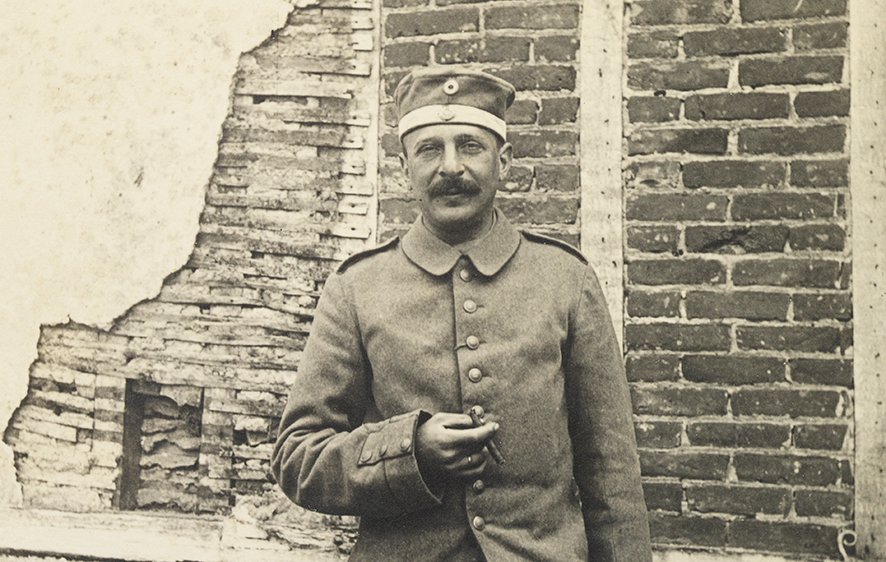
In the summer heat of 1914, the streets of Germany were drunk with something difficult to name. As the Emperor’s proclamation of mobilisation rang through the air, crowds roared and young men jostled one another in the long lines of volunteers. Among them, thousands of Jews — men who felt themselves German before anything else. University graduates, merchants, musicians, students. The time had come to prove their loyalty to the fatherland not with words, but with their blood.
Over the course of the war, approximately one hundred thousand German Jews joined those ranks. Seventy thousand served on the front lines. Twelve thousand did not return. What remained, in the end, were the stories of these men — names that found their way into neither monument nor textbook.
The Fervour of Volunteers and the Weight of What It Cost
In the war’s first weeks, twelve thousand Jews enlisted without waiting to be called. In August 1914, the Federation of German Jews helped establish something that had never existed within the German army: military chaplains serving in the field — the Feldrabbiners. Eighty-one rabbis volunteered. The first seven began their service that September. Among them was Leo Baeck, who would become one of the most profound architects of Jewish thought in the decades that followed.
The war itself proved nothing like the gleaming victories propaganda had promised. In the mud-choked trenches of the Western Front, in the freezing winters of the East, these soldiers stood shoulder to shoulder with ordinary German conscripts. Bullets did not ask about faith.
The Iron Crosses on Their Chests
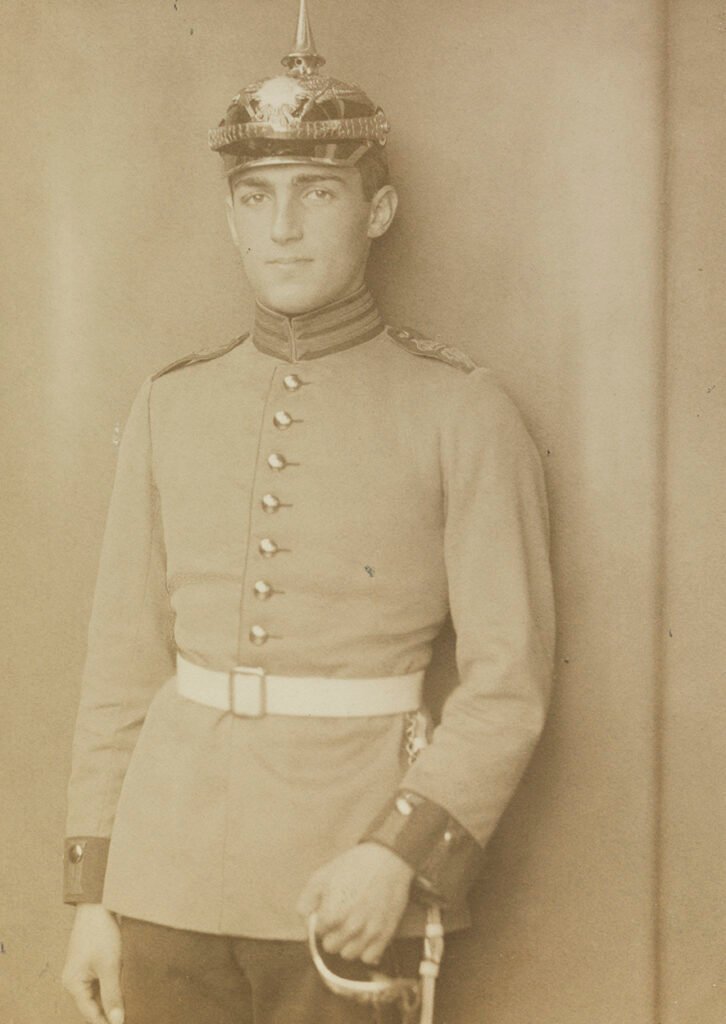
Over the course of the war, eighteen thousand German Jews were awarded the Iron Cross; one thousand of those were first class — the highest distinction. Many names have since been forgotten, yet some stories survive as testament to an almost incomprehensible courage.
Wilhelm Frankl was the first pilot in the German air force to receive the Pour le Mérite — the highest military honour the Empire could bestow. He was of Jewish descent, and in those years that detail was noted by neither those who presented the award nor those who wrote about it; for in that time, the question of the fatherland made no distinctions, at least not openly.
Fritz Beckhardt claimed seventeen aerial victories. He wore the Iron Cross first and second class, and then the Royal House Order of Hohenzollern. The German Emperor personally congratulated him twice.
Letters from the Front: The Quietest Witnesses of the War
By 1917, German soldiers were sending six million letters a day and receiving eight and a half million in return. Most of these letters were never written to be read a second time. Some passed from hand to hand before the writer ever reached the front. Some were found in uniform pockets, torn by bullets.
A letter written by a young soldier named Gerhard Henschel to his family offered a quietly tender portrait of the camaraderie of those days. Describing the men sharing his billet, he wrote:
“Our room looks splendid — two Christians, and the rest of us a minyan!”
In pressing the Yiddish word for a quorum of ten — minyan — into that single sentence, Henschel captured, with his own particular wit, a truth about war: when the war counted its men, it saw not their faith but their place in the line. Yet Henschel himself was killed on the Eastern Front a year after writing those words. He was twenty-one years old.
Hans Blumenthal enlisted in Berlin at seventeen. After completing his training in Belgium, he served in an ambulance unit, carrying the wounded from the field. Years later, his son Ralph would recount what his father had passed on to him: that comradeship — between Jewish and non-Jewish soldiers alike — was what kept a man alive, in every sense.
Judenzählung: The Counting of a Dignity
In the autumn of 1916, the War Ministry ordered a census of all Jewish soldiers in the German army. The official pretext was carefully worded, but everyone knew the truth: there were whispers that Jews were evading their duty, that they had settled themselves into comfortable postings behind the lines. The Judenzählung — the Jewish Census — was an accusation dressed in bureaucratic form.
The results were never made public during the war. Publishing them would have presented an inconvenient picture for those who had ordered the count; for the real figures showed that the rates at which Jewish soldiers fought and died differed little, if at all, from those of their non-Jewish comrades.
Arnold Zweig — the German Jewish writer who had volunteered and fought on the fronts of France, Hungary, and Serbia — was on the Western Front when the census order was announced. In a letter to Martin Buber, dated the fifteenth of February, he wrote:
“The Judenzählung was an unheard-of reflection of sorrow — for Germany’s sin and for our own pain. If there were no antisemitism in the army, the intolerable duty call would be almost bearable”.
In that single sentence lived the bewildered bitterness of a man who still had his rifle on his shoulder, who had faced enemy fire for his country — and who felt, nonetheless, that something had broken. Something that could not be mended by any medal.
An Encounter with the Jews of the East
For many German Jewish soldiers, service on the Eastern Front held an unexpected mirror up to their own lives. Assimilated men — deeply rooted in German culture, shaped by its cities and its universities — found themselves in close proximity, for the first time, to the Yiddish-speaking Jewish communities of the East: communities that still held their traditions with fierce, unhurried devotion.
Helmut Freund, a medical officer born in Berlin, recorded his impressions while stationed in Iŭje, a small Belarusian town between Vilnius and Minsk. He wrote of being moved by the poverty of the Jewish community there — and yet struck, almost to the point of awe, by their serenity, by the self-sufficient strength of their faith. Two kinds of Jews, from two entirely different worlds, had looked one another in the face for the first time, in the middle of a war that had not asked either of them to come.
Remembering While Being Made to Forget: Another War After the War
The war ended. Germany was defeated. And very soon, the legend of the ‘stab in the back’ began to circulate — that poisonous rumour claiming Jews, leftists and internal enemies had delivered the country into enemy hands. The existence of tens of thousands of Jewish soldiers who had bled for Germany could have been an answer to this slander. But the number of those willing to hear that answer was smaller than the number determined to spread the lie.
In 1919, the Reich Association of Jewish Front Soldiers — the Reichsbund Jüdischer Frontsoldaten — was founded. Its purpose was plain: to document the contribution of German Jews in the war, and to refute the lies of antisemitism with evidence that could not be denied. In 1932, the federation published a book of remembrance bearing the names of the twelve thousand German Jewish soldiers who had fallen in the First World War. Its title was Die Jüdischen Gefallenen — The Jewish Fallen. In his foreword, the federation’s national chairman, Dr. Leo Löwenstein, described these losses as a ‘blood test in the German sense.’ It was a tragic phrase; for the result of that test would never be declared sufficient.
In 1968, Jewish authorities in Germany decided to mark the known graves of three thousand Jewish soldiers from the Western Front with the Star of David and a Hebrew inscription. Fifty years after the burials — the headstones, at last, were placed.
The Nazi Years: The Medals Were Not Revoked. But Their Owners Were Taken.
When the Nazis came to power in 1933, veteran Jewish soldiers were initially granted a partial protection. It was temporary. On Kristallnacht — that burning night in November 1938 — Jewish veterans who were arrested were released, for a while. Then they too were gone. The fact of having fought alongside Germans in a war made no difference any more.
Willi Ermann had served in the German army during the First World War. He was murdered in Auschwitz. His Iron Cross offered no protection. The decoration the state had given him was of no use at the door of the furnace that same state had built for him.
What Remains
The story of one hundred thousand Jewish soldiers who fought for the German Empire spent long years caught between two separate silences: one born of deliberate erasure under the Nazis, the other cast by the vast, suffocating shadow of the Holocaust. It was difficult to commemorate a sacrifice made on the eve of an annihilation — because that sacrifice had not been enough to prevent the annihilation.
But the letters remained. The diaries remained. The names remained. Gerhard Henschel’s dry wit remained. Arnold Zweig’s grief-laced anger remained. What Helmut Freund saw when he looked East remained. And the register of twelve thousand fallen, written out name by name, remained.
This page of history is as much a record of anguish as it is of honour. It is a hard document — one that shows how loving a country, even dying for it, was not enough. But it also says this: people fight for what they believe in. And that belief, those who come after will either remember — or forget.
This time, the remembering is in our hands.