



The Day a Revolution That Sought to Embrace the World Caught on the Grains of Sand
Sebahattin Çelebi
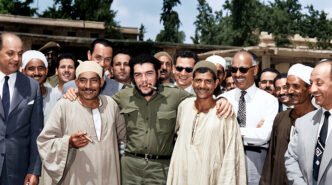
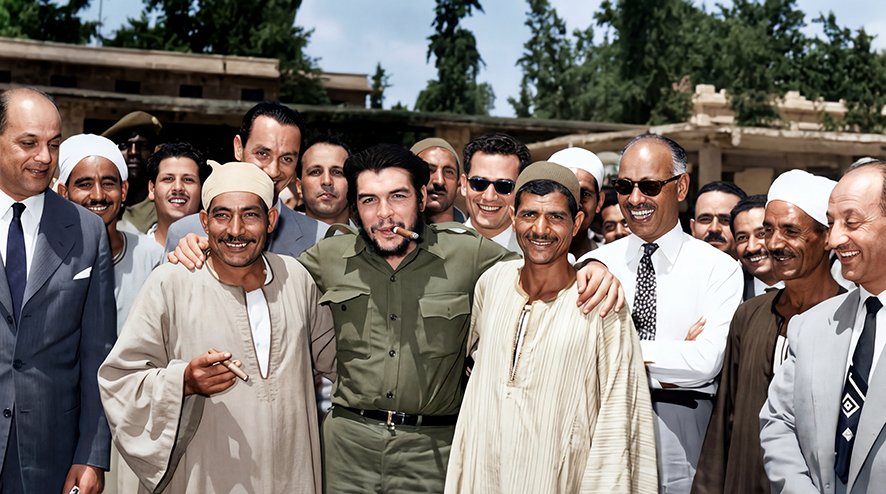
June 18, 1959. Some four hundred and fifty kilometres from Cairo, along that narrow strip pressed against the southeastern coast of the Mediterranean, an unusual visitor appeared before them. A man in military uniform, his beret tilted, his gaze fathomlessly deep, Ernesto “Che” Guevara had landed in Gaza.
That morning, Gaza was still carrying the ashes of 1948 on its back. One hundred and twenty thousand Palestinian refugees were piled into camps of canvas and timber, waiting. People for whom even surviving had become a form of resistance.
When Che walked into those camps, what lay before him was heavier than any poverty he had encountered in Latin America during his years of medical training. This was the first official foreign mission of the Cuban Revolution. Fidel Castro had dispatched Guevara on a diplomatic tour spanning fourteen countries; the aim was to consolidate the new Cuba’s position within the Third World.
Palestinian researcher Salman Abu Sitta described the visit in striking terms: “Che Guevara’s 1959 visit to Gaza marked the historic moment that signalled the beginning of the internationalisation of the Palestinian cause”.
A Doctor’s Road: From Rosario to the Sierra Maestra
Ernesto Guevara de la Serna was born on May 14, 1928, in the Argentine city of Rosario. He was the child of a middle-class family. Throughout his childhood he wrestled with bouts of asthma, yet that fragility never managed to compete with his will.
As he studied medicine at the University of Buenos Aires, a restlessness within him grew. In 1951 and 1952 he travelled the length and breadth of Latin America on a motorcycle. He walked through leprosy hospitals in Peru, bore witness to the conditions under which workers laboured in Bolivian tin mines, and spent nights in the poor neighbourhoods of Chile.
That journey, the great voyage of discovery that would later be immortalised as The Motorcycle Diaries, taught him one thing: the poverty that stretched across the continent had no individual remedy. Disease was a symptom; the true malady was the imperial order itself.
He received his medical diploma in 1953. But on that day he walked out of the institution not so much a physician as a revolutionary.
The Lesson of Guatemala and the Meeting in Mexico
1954 was the turning point of his life. He was in Guatemala at the time, where President Jacobo Árbenz’s land reform law was transferring estates from landowners to peasants. A CIA-coordinated coup toppled Árbenz. Che witnessed that coup from the inside.
He fled to Mexico. And there, in 1955, he met Cuban revolutionaries living in exile. He and Fidel Castro spent a single night in argument. By the time dawn broke, Che had made a decision from which there was no return: he was now part of the Cuban Revolution.
“At my first meeting with Fidel, we spent the night debating. By the time morning came, I was already the group’s doctor. Its doctor, but in truth its fighter”, Ernesto Che Guevara
Sierra Maestra: The Revolution Learned in the Forest
In November 1956, a small group of eighty-two men sailed from the Mexican coast toward Cuba aboard a wooden yacht called the Granma. When they came ashore, Batista’s forces were already waiting; the greater part of the group was either killed or captured within the first months.
The survivors withdrew into the Sierra Maestra mountains. There, Che was both physician and commander. The foco theory he developed during this period, the idea that the spark ignited in rural areas by small revolutionary nuclei would set broader masses into motion, became his most original intellectual contribution.
In January 1959, Havana fell. Batista fled. The Cuban Revolution was engraved into the memory of Latin America.
Nasser’s Invitation: From Cairo to Gaza
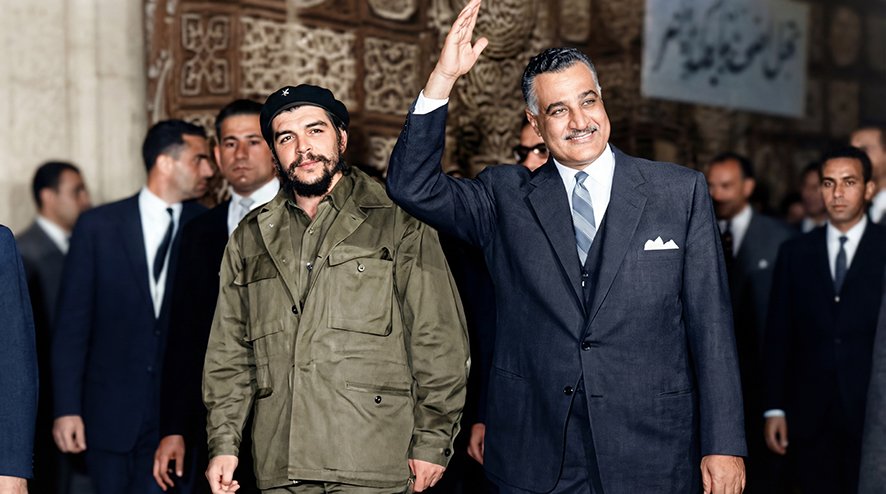
Fewer than six months had passed since the Revolution had proclaimed its triumph when Fidel Castro gave Guevara a new assignment. At the invitation of Egyptian President Gamal Abdel Nasser, the first stop was Cairo.
Nasser was the standard-bearer of Pan-Arabism; he had nationalised the Suez Canal and defied the West. Egypt at the time bore the name of the United Arab Republic, encompassing Syria and Yemen as well. The ideological distance between the two leaders was real, Nasser was not a Marxist but a nationalist; a significant portion of Egypt’s communists were in prison. Yet they shared common ground: a stance against imperialism.
And Nasser made Guevara an offer: he should go to Gaza and see for himself.
The Place Where History Paused for a Moment
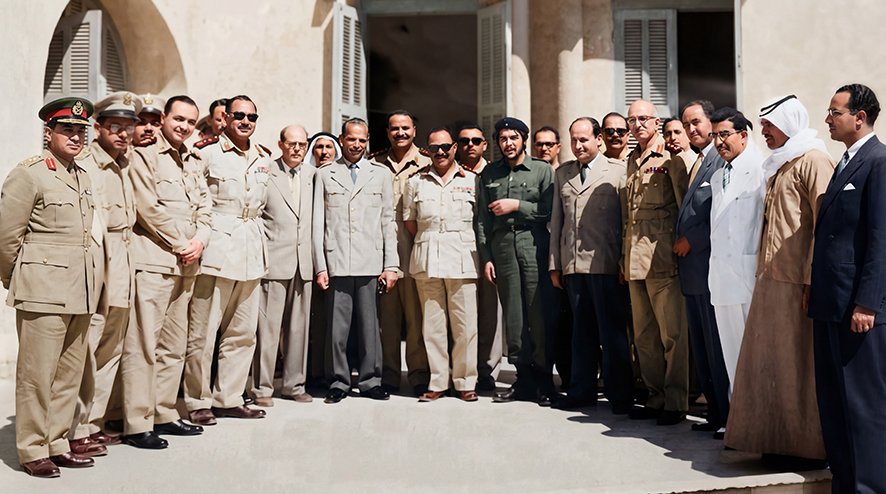
On the morning of June 18, Che arrived in Gaza. He wore his dark military uniform, and on his head the starred beret. Deputy Governor Ahmad Salim was there to receive him.
Photographers had been kept to a minimum; the Egyptian government was wary of Cuba being presented as a revolutionary model. The visit accordingly received almost no coverage in the press. Over the years, only a single photograph survived from that day. Its handwritten caption read:
“With Guevara, hero of the Cuban Revolution. At the residence of Deputy Governor Ahmad Salim. Gaza, 1959”.
During his visits to the camps, Che entered the Al-Bureij refugee camp. The camp’s leader, Mustafa Abu Midyan, voiced complaints about the conditions. Che’s response was blunt:
“Instead of complaining, show me what you have done to liberate your country. Where are the training camps? Where are the weapons factories? Where are the mobilisation centres?”
Those words were the essence of Che’s revolutionary understanding. Bearing witness to suffering was not enough; suffering had to be transformed into an organised will.
The Al-Shati Camp and “Gaza’s Guevara”
In that same year, a child was growing up in Gaza’s Al-Shati refugee camp: Mohammed Al-Aswad. Born in Haifa in 1946, he had fled with his family to Gaza in the wake of the 1948 war. At the time of Che’s visit in 1959, he was barely thirteen years old.
Over the years, Al-Aswad became one of the legendary names of the Palestinian resistance movement. When Israeli military authorities spoke of him, the words of Dayan passed into history:
“By day we govern Gaza; by night Guevara and his comrades govern it”.
The “Guevara” here was of course not Ernesto Guevara, Dayan meant Al-Aswad. Yet the very nickname made plain the symbolic bond that Gaza had forged with the Cuban Revolution. Mohammed Al-Aswad was besieged and killed in Gaza on March 9, 1973, by Israeli forces under the command of Ariel Sharon.
The Heavy Legacy of a Day That Passed in Silence
After the visit, Che did not record Gaza in his official reports. He did not mention it at press conferences. Viewed from the outside, this visit appears to be a missed moment, a lost opportunity.
But history does not operate quite so simply. It was through Che’s books that revolutionary theory reached the Palestinian youth of the 1960s. Some Palestinian training camps were given the name Camp Che Guevara. In the 1990s, leftist youth in the Nuseirat refugee camp founded the Che Guevara Cultural Club.
Cuba was among the first states to recognise the Palestine Liberation Organisation. This defined the tone, diplomatic, symbolic, human, that the small step taken in Gaza would carry across the decades that followed.
The Revolution’s Unfinished Final Sentence
Che left Cuba in 1965. He went to the Congo, he tried to ignite revolution in Africa and failed. Then he crossed into Bolivia. In 1967, in the mountains, he fought alongside a small group of roughly fifty men against the Bolivian army. CIA-backed operations gradually encircled the group.
October 9, 1967. He was captured in the village of La Higuera. The following day he was shot. He was thirty-nine years old. When the news of his death spread across the world, millions refused to believe it. His poster grew still larger. Death could not stop him, on the contrary, it carried him into eternity within a frozen instant.
“Hasta la victoria siempre, Until victory, always”.
What was there in those twenty-four hours, in that single photograph, in those camp visits?
Perhaps this: history sometimes moves not from official documents but from the mud-soaked floor of a camp, from the eye of a refugee, from the hard words of a commander. Che did not write Gaza into his reports. But Gaza wrote Che into its memory.
Today, in Gaza, there are still clubs and streets bearing his name. On its walls, Che’s portrait hangs alongside those of Nasser and Arafat. This is no accident. Every resistance that sets itself against imperialism borrows words from somewhere as it builds its own language.
The man who walked into and out of those camps on June 18, 1959, left something behind without knowing it: the dignity of being seen. And for people, sometimes the most revolutionary act of all is just that, to come, to look, to bear witness.
“If a human being is in chains, every free human being is obliged to set them free”, Ernesto Che Guevara