


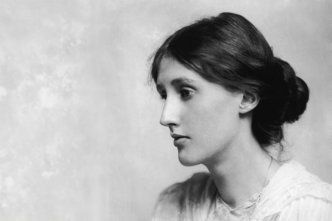
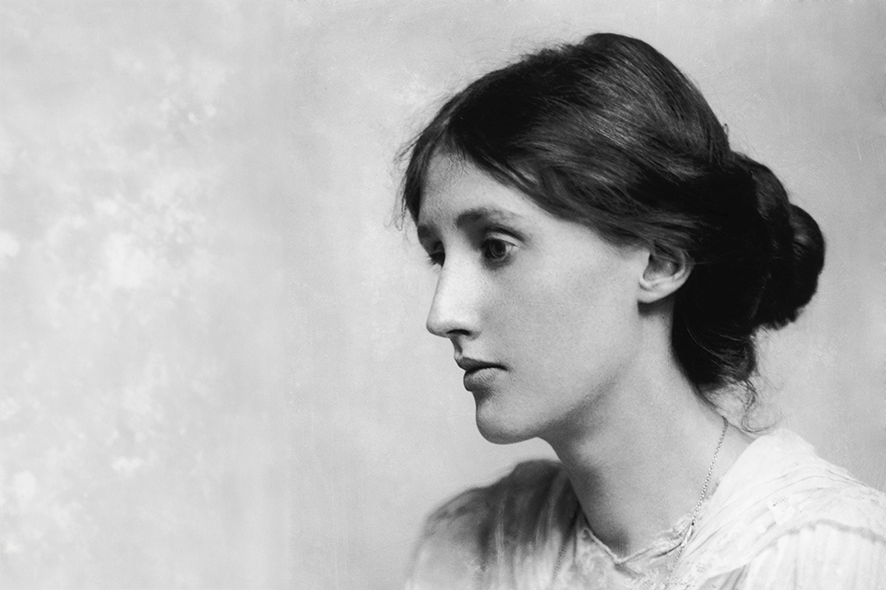

She had seen her in a black-and-white photograph. Virginia sat thinking beside a window, in an armchair upholstered with patterned fabric, dressed in a garment of velvet-like cloth, a brooch at her collar whose exact shape she could not make out from the photograph, and a wide, long skirt cut from the same material.
Hatice Dikbaş
Again, reading the book in her hands, she noticed that her mind had drifted from the text, and she set it down on the coffee table in front of her.
But she had closed it again without marking the page.
She muttered to herself: “When is this book ever going to end?” Back and forth like that, losing enthusiasm every time she had to start from the beginning to find her place. And yet she had chosen to read literature herself. She loved it. Novels most of all. She would put herself in the place of the novel’s characters, play her own role in the cinematic scenes she constructed in her mind. Sometimes she would set the book aside, take up screenwriting, and write the story’s continuation herself. But now reading had become an obligation.
Exams were drawing near, and if she wanted to graduate she had to read every one of these books. Perhaps being compelled to read was what was stripping the pleasure from it and pulling her mind away from the story. She had never, from the beginning, liked things done by force. When left to her own devices, she would dash through a task; the moment someone or something pressured her, she wanted nothing to do with it. There was opposition in her soul. She was, after all, the living embodiment of what her mother said in anger: “Everyone goes the right way; our girl goes the wrong way”. There was no small amount of truth in that, to be honest. Once, while her mother was heading out to visit and had dressed her in a lemon-yellow party dress with ruffled hems and floral embroidery, warning her: “Don’t go out into the street and get dirty!” she had seized the empty house to do precisely that, and had smeared herself with tar watching the road-paving crew, and taken a beating for not listening. If her mother hadn’t said to stay inside, she might well have amused herself by sitting in and watching the guests’ behaviour; but she had done the opposite of what she was told, as always. How many other things had she defied, countless. She didn’t actually like this trait in herself, because it got her into trouble every single time. Her mother had said “No” about that boy too, but she had stubbornly insisted “Yes”, and as if family troubles weren’t enough, she had brought this love down on her head like an affliction as well.
She hadn’t counted how many coffees it had been, but she got up and decided to make another. Perhaps it would gather her scattered mind. “Will my life always be this hard?” she thought, waiting for the coffee to come to a boil. “Will everything always pile on top of everything else?” She knew she would never learn where she was supposed to give up and where she was supposed to carry on. She had been taught not to give up. Yet she too was a human being, and giving up was perfectly human.
Simply to avoid being called someone who gave up and walked away, how many bottomless pits had she fallen into, and only she and God knew the price she had paid to climb back out.
“If only”, she said. “If only I had given up that love”.
Not long ago she had seen a photograph online, found it interesting, and gone back to look it up. The photograph was of a five-storey, eight-ramp junction that had opened in the Chinese city of Chongqing. A news report about it read: “A person who takes a wrong turn could spend at least an entire day trying to get out”.
That, she thought, is an image of the inside of my head. She would take a wrong turn of thought, spend days searching for the right road, and just when she thought she had found it, another bend would appear and she would go on circling inside the junction.
She scrunched her face at the first sip of the viciously bitter coffee, but she loved that bitter taste. She thought of women who drank milky, sweet coffee, fragile, delicate women who had others open even the cap of their water bottle for them. Who was cleverer, who was stronger?
She took her coffee and walked toward the sitting room of the flat, a room whose landlord’s remarkable taste announced itself in turquoise wall paint, gilded plasterwork cornices, and glass-panel doors she had never been able to make sense of. She dropped herself onto the slightly shiny, flower-patterned blue sofa bought secondhand, the one where you could feel the springs if you sat a certain way. “Right then”, she said to herself, “what was this novel’s character troubled by? Why did she keep finding herself in such dreary surroundings, and why had her identity, her very gender, suddenly changed in the middle of the book?”
She turned to Virginia, the queen of English fiction, a title she herself had bestowed, the crown she had placed with her own hands upon first reading Mrs Dalloway, and said with a laugh: “You were never quite normal either, were you?”. She imagined herself in the place of Queen Virginia, picturing the formidable cliffs of the county of Sussex where she had lived, the chalk downs, the forests and heathlands to the north of the town, all in a cold, misty, rainy atmosphere. She had never seen any of these things with her own eyes; she had learned them all from the novels she had read.
She had seen her in a black-and-white photograph. Virginia sat thinking in an armchair upholstered with patterned fabric beside a window, wearing a garment of velvet-like cloth, a brooch at her collar whose shape she couldn’t quite make out from the photograph, and a wide, long skirt in the same fabric. She was no longer the Virginia of that scene. She stood up. She was in pyjamas and slippers, technically, but in keeping with the demands of her role she straightened her clothes. She walked toward the window. What lay before her, she imagined, was not snowy mountains but an ice-blue, rippling sea beyond misty trees. She took the coffee cup in her hand. She was careful not to forget to substitute her own table and chair for the indispensable elements of her imagined setting: an old oak chair and desk. She had always wanted furniture like that. A desk whose surface bore the marks of a lived life, with a slim, long, lockable drawer underneath, its key hidden in a box shaped like an old book. And a chair with fabric-upholstered armrests and a wide seat, heavy to lift because it was solid natural wood, and just slightly creaky. She had lost herself in her daydreams so completely, as always, that as she sat down she smoothed out the non-existent skirt at the back so it wouldn’t crease.
Caught in the gloomy spell of the life she was living in her dream, she was dragged back to the real world by the maddening alarm on her phone. After yet another sleepless night, she had to go to class. Her absences had piled up to the bone, and the mercy of her lecturers had been deferred to next term. So she had set alarms to go off one after another. She leapt up and stood in front of the portable wardrobe, a monument to ugliness, with a zipper and bars so warped they sometimes made it lean sideways. In her dream there had been oak furniture; in reality, plastic. She may not have had a life, but her dreams were quality, at least.
The air was viciously cold outside and if you stayed in it too long it quite literally stabbed you in the legs. She would wear trousers, yes, but she hated the woollen thermal underwear she was supposed to put on underneath. The question “What should I wear today?” always brought her to the same point: “How can a girl wearing thermals ever feel beautiful?” Especially when she knew she was going to be under the same roof as the boy she was in love with. “Oh, enough, do you really have to be this cold? Come on, let’s reach an understanding, let’s get a bit closer. Maybe we’ll warm up”, what would it matter if she said that? Wherever was the courage for it in her. She put on her thermals, then her khaki corduroy trousers, then the thick, ribbed-pattern turtleneck jumper her mother had knitted for her the previous year in beige. Her hair had been naturally cooperative since the beginning of time. Her face had at least smiled upon her in that respect. She rarely bothered to style it, yet it generally sat well. She was looking herself over when the clock suddenly caught her attention. If she didn’t leave now she would miss the bus. “Skip the make-up then”, she said. She hurriedly stuffed her books into her bag. Scarf, hat, gloves, whatever God had provided, she put it all on. And threw herself out into the street, frozen solid as glass.