


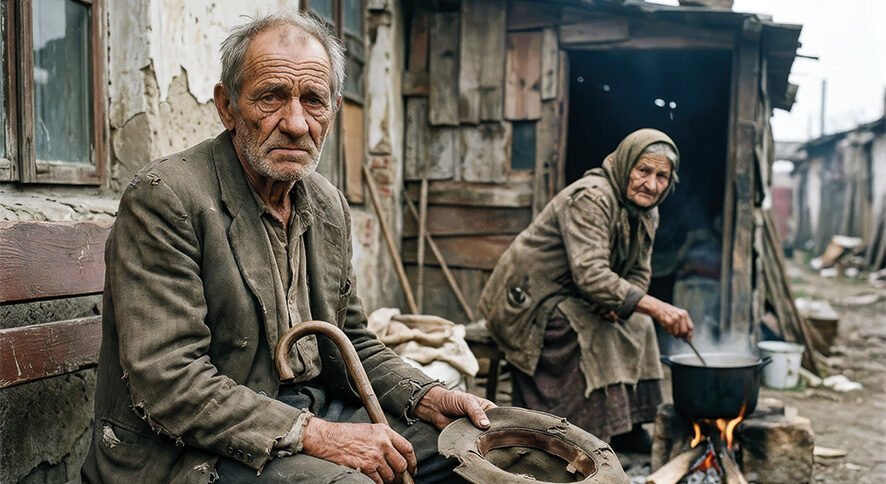

When a person shares their memories, they return, if only for a moment, to that young self: the one who ran, laughed, hoped. When an older person tells of their past, what enters their voice is not trembling, but strength. For what has been lived carries an invisible resilience that stands in the spine of a human being. And that resilience becomes a light for the present, each time it is given words.
Seval Tuncer
Old age is the quietest season of life. Like a calm evening after days that once passed too quickly, memories crowded to the brim, and frantic mornings… Viewed from the outside, old age appears peaceful; yet within its inner world it carries a depth that moves in waves.
As the years pass, a person notices that their surroundings are slowly changing. Those who were once always at their side grow distant; the noise of the city no longer reaches the ear as closely as it once did. The silence in the house stretches out toward evening. Loneliness in old age is often not a choice, it is a natural transformation of life.
Yet what hurts most is that the words accumulated in language find no way out. A person grows quieter as they grow older. For the people they wait to tell their stories to are no longer there, or those people no longer take the time to listen.
Old people often carry within them the stories they have kept inside. The excitement of their youth, the scent of their childhood, the shadow of those they loved… Everything is carried on the shoulders as memory. But the heaviest burden is the absence of someone who knows how to value what they wish to tell.
The difficulties of old age are not confined to the wearying of the body. Memory wavers; even when mental sharpness is preserved, words sometimes arrive too late, mornings no longer begin as swiftly as they once did. Tasks once accomplished with ease now demand patience and care. The body grows heavier; the fragility of the soul deepens.
And yet old age holds within it an unbreakable strength: the strength of resistance. The holding fast to life, the grace of slowing down, the meeting of difficulties in one’s own rhythm…
Old people struggle against hardship mostly with patience. Sometimes praying, sometimes looking at old photographs, sometimes speaking to themselves over a cup of tea… For with the years one learns: what keeps a person upright is not quantity but meaning. And meaning is often concealed in the mother tongue.
The Mother Tongue as Anchor
For an old person, the mother tongue is both a form of remembering and a means of holding on. Someone calling them by name, smiling and asking “How are you?”, listening patiently to a shared memory… All of this awakens the light inside an old person anew. The mother tongue speaks not only through sentences, but through a warmth that makes presence felt.
A person who cultivates empathy knows that this warmth is what is needed most. For in old age, being spoken to is a person’s way of saying: “I am still here”. Being understood is the quietest expression of “My life was not in vain”.
Faced with hardship, the greatest strength of old people lies in their own quiet resilience. Their slow but steady gait, their silent bearing of pain, their acceptance shaped by the maturity the years have taught… Their resistance is not loud as in youth; but it is rooted, deep, and composed.
And for those who understand, this is what is most moving about old age: inside every old person, a young heart still beats. There is still a story that wishes to be told, still a laughter hidden away, still a memory waiting to make the eyes shine. Their needs are not great things; sometimes a greeting, sometimes a question, sometimes a belated thank-you… And most often, simply that someone truly hears them.
Ageing Is Not Silence
Ageing is not silence; silence is the consequence of not being heard. And what brings a person back to life is often not great miracles, but small yet sincere words.
Old age is the most fragile yet the wisest season of life. A person’s story, however old it may be, grows young again when it is put into words. For every story breathes as it is told. The light that once shone in the eyes whispers that it has not been extinguished beneath the weariness of the years.
When a person shares their memories, they return, if only for a moment, to that young self: the one who ran, laughed, hoped. When an older person tells of their past, what enters their voice is not trembling, but strength. For what has been lived carries an invisible resilience that stands in the spine of a human being. And that resilience becomes a light for the present, each time it is given words.
The Hidden World of the Old
The world of old people often appears, from the outside, very quiet. And yet the storms within have long since settled, making way for a sea kneaded with wisdom. That sea is sometimes still, sometimes lightly rippled, but always deep. For every old person carries within them the secrets that a long life has quietly accumulated.
And it is precisely here that the subtlest difficulties of old age reveal themselves: a fragile body carries a strong soul; a fading memory holds feelings that never pale; a loneliness-gathering surroundings gives rise to an enriched inner world. As they navigate each hardship, they quietly wrap themselves in the patience the years have given them.
Some can no longer go on long walks, yet they travel great distances through memory. Some can no longer speak loudly, yet they know how to tell with a single glance what moves in the heart. Some sit in a room of their home, while their thoughts travel back and forth across past years: to the laughter of a loved one, to the voice of a friend, to a child’s first step…
Old age is a person’s journey into their own interior. Despite the difficulties encountered on that journey, most older people carry their inner strength without saying so to anyone. That strength is unassuming, yet unshakeable. Youth conceals itself in bold steps; old age conceals itself in quiet endurance.
An older person experiences a ritual even in the morning opening of their window. They listen to the direction of the wind outside; when the sun seeps through the clouds, they smile faintly, for they know: life goes on, no matter how late the hour. And in everything that goes on, there lies a new meaning.
It is language that carries this meaning most deeply. An old person’s speech can sometimes be slow, sometimes trembling, sometimes very brief. But what they say always leaves a trace. Each word is like a pearl, filtered from the sediment of the years, a grace. And for this reason, every story hidden within an old person, when shared, turns green again. Every life that is put into words defies time.
Old age is therefore not only an autumn; it is at once a painting drawn with the shadows and lights of a long life. Anyone who can look upon that painting sees how resilient, how deep, how precious a human being is.
Growing Younger in Old Age
Old age is not an ending; it is a quieter form of existence. And a person’s story becomes immortal when it is told. For every word is a bridge reaching to the quietest place in life. The older a story is, the more it grows young again when it is returned to language. And that youth arises not in the body, but in the light of the soul…
Growing younger in old age, by telling, by being heard, by being understood. For every story that is shared breathes. And every life that lives on in words overcomes time.
Old people struggle against hardship mostly with patience. Sometimes praying, sometimes looking at old photographs, sometimes speaking to themselves over a cup of tea… For with the years one learns: what keeps a person upright is not quantity but meaning. And meaning is often concealed in the mother tongue.